Photos are Precious Memories
If photos are damaged by water place them in a freezer immediately until you can get to them.
Causes and Effects of Damage
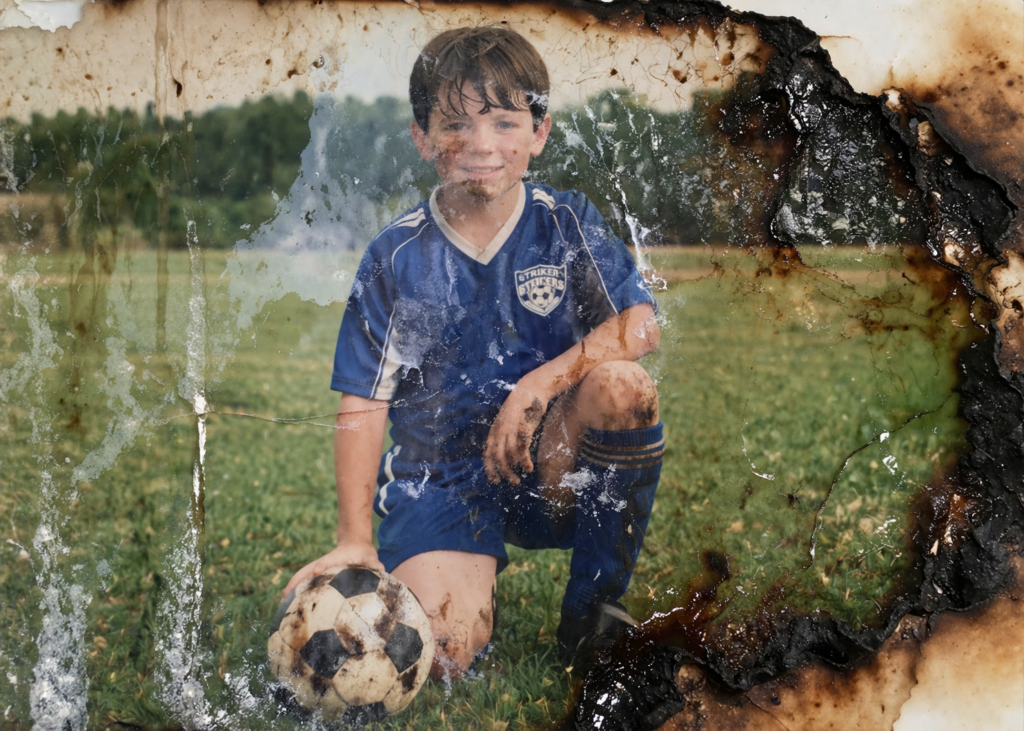
Family photos can suffer serious damage from smoke and water due to both physical and chemical reactions. Quick action is important to prevent permanent loss.
- Smoke leaves soot particles that create a sticky residue, which can smear or embed into the surface.
- Heat and smoke exposure may cause fading, discoloration, or curling of photos.
- Water can cause photos to stick together, warp, or grow mold within 24–48 hours.
- Contaminants from floods or firefighting efforts, such as dirt and chemicals, can make restoration more difficult.
- These risks show why immediate and careful handling is necessary.
Restoring Water- and Smoke-Damaged Photos
Proper steps can improve the chances of saving damaged photos when handled carefully.
- For water damage:
- Begin restoration quickly to reduce mold growth.
- Rinse gently with clean, room-temperature water to remove debris.
- Separate stuck photos by soaking them instead of pulling them apart.
- Dry photos flat on a clean surface with gentle airflow, avoiding heat or sunlight.
- For smoke damage:
- Use clean gloves to prevent oils from transferring to the photo surface.
- Remove loose soot with a soft brush or lint-free cloth without rubbing.
- Apply photo-safe cleaning solutions for deeper stains if needed.
- Remove odors by placing photos in a sealed container with baking soda or charcoal.
- For water damage:
Photos Stuck to Glass
- Causes of Photos Sticking to Glass
Photos can become stuck to glass due to moisture, heat and poor framing conditions. This type of damage can happen slowly or very quickly.
- A lack of airspace between the photo and glass allows moisture to build up.
- Moisture and heat cause the photo emulsion to soften and become sticky.
- As the moisture dries, the photo bonds to the glass surface.
- Improper sealing, use of cleaning sprays or high humidity environments, such as bathrooms, increase the risk.
- Risks of DIY Removal
Attempting to remove a photo from glass without proper knowledge can cause permanent damage.
- Common DIY methods include freezing, heating, or using chemicals.
- These methods can worsen damage or destroy the image.
- Pulling the photo away from the glass may tear the emulsion.
- Damage may result in loss of image detail or parts of the photo.
- Once the surface is torn, restoration becomes much more difficult.
Mistakes to Avoid and Professional Help
The following professional approach improves the chances of preserving the image.
- Professionals can scan the image through the glass to create a digital copy.
- Experts can safely remove dust or debris without harming the surface.
- Specialized knowledge of photo chemistry may allow safe separation in some cases.
- Keeping the photo intact offers better restoration results than partial damage.
Improper handling can cause more harm than the original damage, so careful methods are required.
- Avoid rubbing the surface, as it can spread soot or scratch the image.
- Do not use sharp tools to separate stuck photos.
- Delays can lead to mold growth, staining, and permanent damage.
- Professional restoration may be needed for severe or delicate damage.
- Benefits of professional services include:
- Use of advanced tools such as freeze-drying equipment.
- Safe cleaning methods for removing soot and stains.
- Digital restoration and scanning to preserve images.
Protection and Long-Term Preservation
Preventive steps can reduce the risk of future damage and help preserve valuable memories.
- Store photos in acid-free sleeves or albums to prevent deterioration.
- Create digital backups to ensure copies remain available.
- Use waterproof and fireproof containers for added protection.
- Regularly inspect storage areas for moisture, mold, or pests.
- Proper storage and monitoring can extend the life of photos.
Key Takeaways
- Smoke and water can cause staining, warping, mold growth, and fading in photos.
- Quick action is critical to prevent permanent damage.
- Gentle cleaning, careful separation, and proper drying improve restoration success.
- Avoid harsh handling methods that can worsen damage.
- Professional restoration offers advanced tools and preservation techniques.
- Proper storage and digital backups help protect photos from future loss.
- Professional restoration offers safer and more effective solutions.
- Careful handling and proper storage help prevent future damage.
This article was partly based on this posting.