Adjuster Check List on Art & Collectibles Water Damage
When inspecting artwork for water damage, an adjuster needs to evaluates both the visible surface and the hidden structural components of the piece. Because art is highly sensitive to environmental changes, adjusters must look for signs of immediate liquid contact and secondary damage from humidity.
Looking For Surface-Level Damage
- Blanching or “Blooming”: A white, frosty, or cloudy appearance on the varnish layer of oil paintings, caused by moisture seeping into the protective coating.
- Staining and Tidelines: Dark, yellowish, or brown stains on the front or back, often with a defined border where water has settled and dried.
- Paint Issues: Flaking, lifting, or blistering of the paint layer. Adjusters should look for vertical patterns of paint loss, which typically indicate water running down the piece.
- Microscopic Verification: Forensic tools like microscopes and UV lights can be used to distinguish between pre-loss issues (older, dusty tears) and new damage caused by the recent event.
- Adhesion to Glass: For framed prints or photographs, check if the paper has become fused or “stuck” to the glass, which can make restoration difficult.
Looking For Structural and Material Changes
- Warping and Distortion: Look for bending or bowing in wooden frames, stretcher bars, or panels. Canvas supports may shrink dramatically when wet, causing the paint layer to buckle or crack.
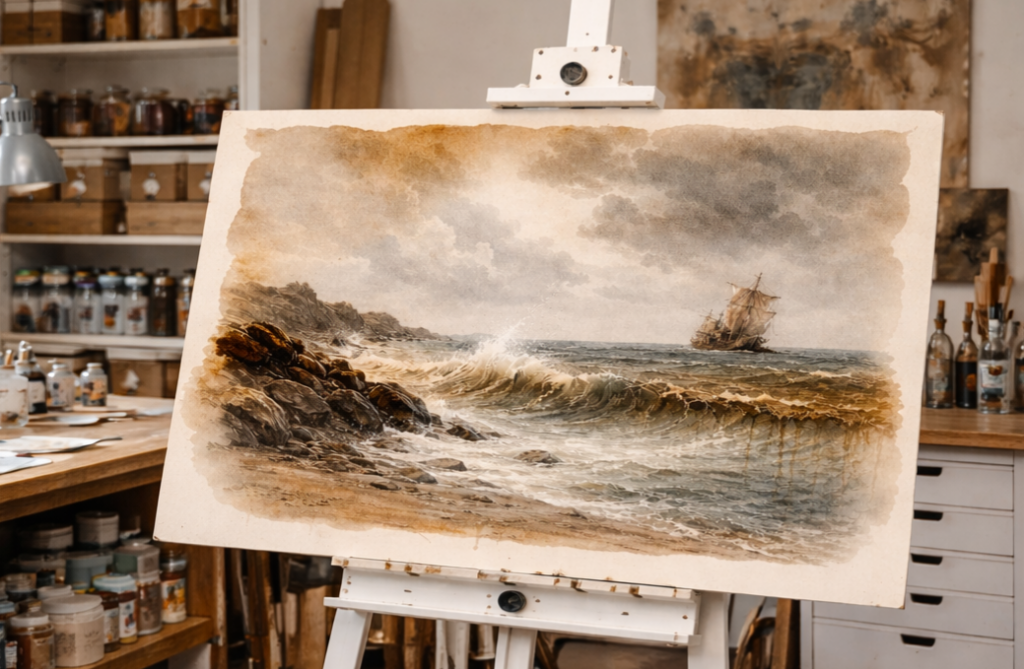
- Rippling or Cockling: “Bumps and ruffles” in paper-based art, such as prints or watercolors, due to uneven moisture absorption.
- Stretcher Bar Staining: Adjusters must look at the back of a painting; dark, substantial stains on the wooden stretcher bars are a primary indicator of water intrusion.
Looking For Secondary and Biological Risks
- Mold Growth: Mold can appear as black, brown, or white fuzzy patches on either side of the artwork or behind the frame, thriving in the damp environment created after a leak. Time is of the essence requiring mitigation to lessen the possibility of mold growth.
- Insect Activity: High humidity can attract pests like silverfish, which may eat away at paper, mats, or even the paint itself.
- Hidden Moisture: Behind the frame, adjusters look for signs of long-term moisture that may have gone unnoticed, such as mold on the wall behind the hanging location.
Inspecting Collectibles
For collectibles (e.g., books, heirlooms, rare toys), the inspection focuses on:
- Inherent Vice: Adjusters need to check if the damage is due to the item’s own delicate nature or poor original materials rather than the water itself.
- Loss of Function or Rarity: For collectibles, damage to original packaging (like boxes for toys) or mechanical components can significantly diminish the overall market value, even if the item itself looks “fine”.
- Craftsmanship vs. Sentiment: Adjusters should categorize items by their monetary, sentimental, or craftsmanship value to decide if restoration costs are justified compared to replacement costs.
Key Takeaways
- Artwork inspection includes both surface and structural evaluation.
- Time is critical, if the item is wet, to prevent further damage or the occurrence of mold.
- Common surface damage includes staining, paint issues, and clouding.
- Structural damage may involve warping, shrinking, or rippling.
- Mold, insects, and hidden moisture can cause additional harm.
- Collectibles are assessed based on material quality, function, and value.
- Restoration decisions depend on cost compared to item worth.
This articles is partly based on these posting: source1 and source2