Planning and Designing Art Storage
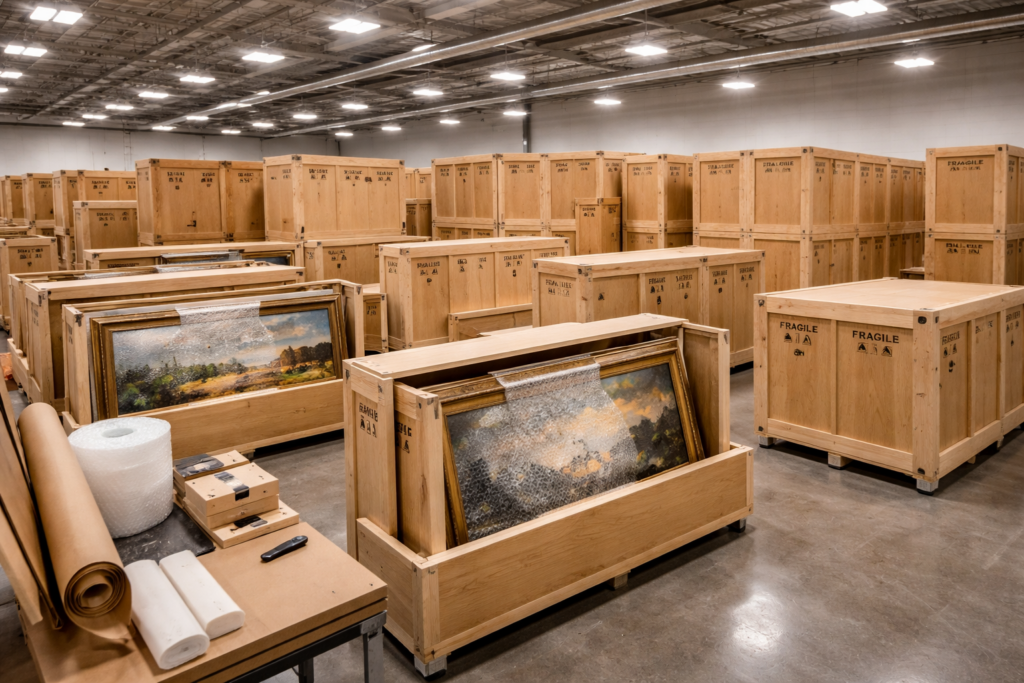
Storing artwork that is not on display requires careful planning but can be done at home or off-site. Storage should protect the artwork while allowing easy access and future growth of the collection.
Key planning considerations include:
- Choosing between home storage or professional off-site facilities
- Estimating current and future storage needs
- Deciding if the storage area should be visible or hidden
- Determining if climate control is necessary for certain materials
Proper planning helps prevent damage and ensures long-term preservation.
Storage Solutions for Different Spaces
Various storage designs can fit different environments and collection sizes. These solutions can be adapted for both homes and galleries.
Common storage approaches include:
- Large painting racks built into living spaces with removable supports
- Closet storage systems for smaller framed works using adjustable shelves
- Shelving units for archival boxes that store unframed works on paper
- Functional gallery storage areas designed for efficiency rather than appearance
Important design features:
- Use of separators to prevent artworks from touching
- Shelves covered with soft materials like carpet to avoid damage
- Adequate spacing for easy removal and handling of artwork
These systems improve organization and reduce the risk of wear.
Protecting Artwork Through Proper Design
Storage systems must protect artwork from physical and environmental damage. Materials, spacing, and structure all play a role in preservation.
Key protection methods include:
- Maintaining proper airflow and stable temperature
- Using foam core or fluted separators to avoid scratches
- Ensuring shelves are strong enough to support weight
- Avoiding storage on floors or under beds
Additional design tips:
- Keep rack depth suitable for artwork size
- Allow enough aisle space for safe movement
- Use adjustable shelves for flexibility
These steps help maintain the condition and value of artwork.
Best Practices for Long-Term Storage
Long-term storage requires attention to detail and consistent care. Poor storage methods can lead to damage over time.
Recommended best practices:
- Store artworks upright, never sideways or upside down
- Use properly sized separators that match rack dimensions
- Avoid overcrowding shelves to prevent pressure damage
- Regularly review and adjust storage as the collection grows
Following these guidelines ensures artwork remains safe and accessible for years.
Key Takeaways
- Proper planning is essential for safe and efficient art storage
- Storage systems can be customized for homes or gallery spaces
- Protective materials and correct spacing prevent damage
- Climate control and airflow are important for preservation
- Avoid unsafe practices like stacking or storing under beds
- Regular organization and maintenance support long-term care
This article is partly based on this posting.