Adjuster Check List on Electronics Water Damage
An adjuster needs to inspect electronics for clear signs of water exposure and evaluates how severe the damage may be.
Visible Signs of Water Damage
- Water lines or tidelines on devices help determine how deeply water reached inside components.
- Dark spots on screens, often called “ink blots,” may appear on TVs or monitors due to moisture trapped between layers.
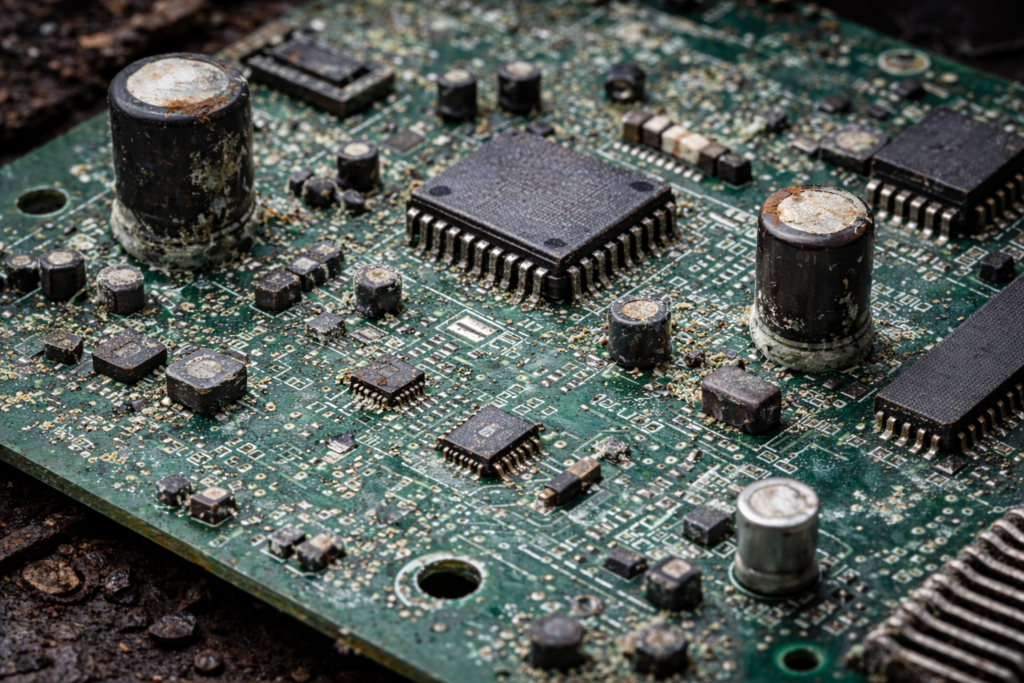
- Oxidation may show as green discoloration on metal parts, while white residue may appear on internal surfaces.
- Damaged or peeling labels can confirm moisture exposure.
- These visible signs help identify whether the device experienced direct water contact or high humidity.
Key Evaluation Factors
Several important factors can guide the inspection and claim decision process.
- Power status at the time of exposure is critical, since powered devices are more likely to suffer short circuits.
- The level of exposure is assessed, including full submersion, partial contact, or humidity-only exposure.
- The type of water matters:
- Clean water causes less damage but can still harm circuits.
- Gray water contains contaminants that increase risk.
- Black water, such as sewage or floodwater, often leads to full replacement due to contamination.
- The duration of exposure affects corrosion and long-term damage.
- The condition of the device before the event is reviewed to rule out wear and tear.
- Repair costs are compared to replacement value, especially for smaller electronics.
Hidden Damage and Long-Term Risks
Some damage may not be visible right away, but it can still impact safety and performance.
- Internal corrosion can occur when water reacts with metal components, leading to broken electrical connections.
- Short circuits happen when water creates unwanted electrical paths, while long-term exposure may lead to open circuits from corrosion.
- Microbial growth, such as mold, may develop inside devices if moisture remains trapped.
- Insulation damage may reduce electrical safety and performance.
- Warning signs like sparks, unusual noises, or burning smells may indicate serious hazards.
- High humidity alone can cause screen damage and internal deterioration over time.
Repair, Replacement, and Safety Considerations
Final decisions focus on restoring the device safely and cost-effectively.
- Mechanical parts in appliances may sometimes be cleaned and restored if contamination is limited.
- Electrical components are often replaced due to sensitivity and safety risks.
- The decision depends on factors such as water type, exposure time, and drying conditions.
- Smaller electronics are often replaced because repair costs may exceed their value.
- Devices should never be powered on after water exposure until inspected by a professional.
- Expert evaluation ensures accurate decisions about repair, replacement, and claim settlement.
Key Takeaways
- Visible signs like water lines, screen spots, and corrosion help confirm water damage.
- Key factors include power status, water type, exposure level, and prior condition.
- Hidden risks such as corrosion, mold, and insulation damage can worsen over time.
- Short circuits and long-term corrosion are major causes of failure in electronics.
- Repair decisions depend on safety, cost, and extent of damage.
- Professional inspection is essential before using or restoring water-damaged devices.
This article is partly based on these postings: source1 and source2.